ServicesWindshield Protection Film
Windshield Protection Film in North Auburn
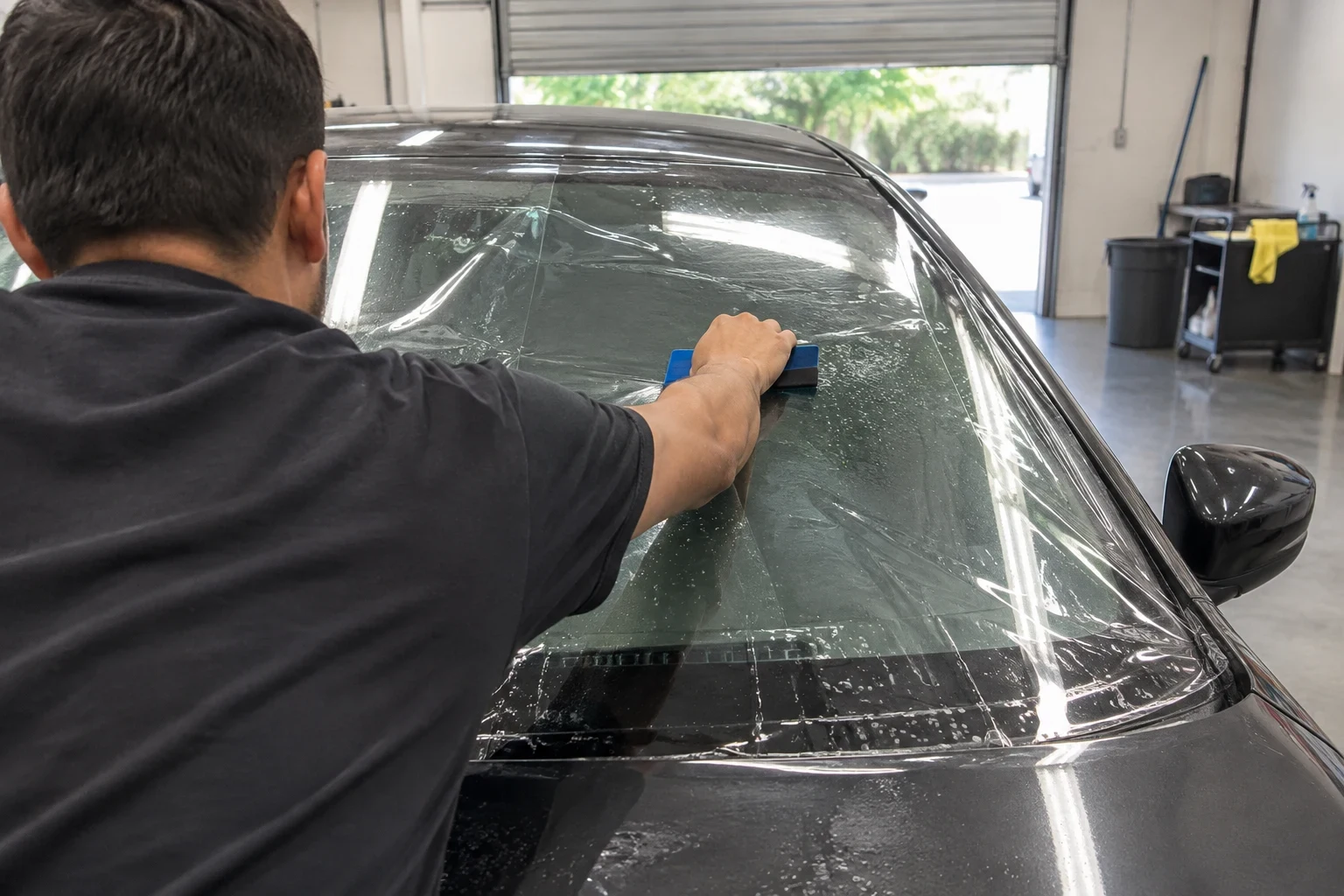
A thin, optically clear film goes on the outside of your windshield and takes the hits from gravel, sand and road debris. When it finally wears, we peel it and lay fresh film. Your factory glass, and the cameras behind it, stay untouched.
A sacrificial layer for the glass you look through
Windshield protection film is a clear, impact-absorbing layer made specifically for automotive glass. It flexes when a rock strikes, spreading the force so the glass underneath is far less likely to chip or start a crack. It also takes the slow sandblasting that leaves older windshields hazy and full of glare at night.
It is not window tint and it does not darken your view. Good film is built to be optically clear, so once it is installed well you should forget it is there. That last part depends on the install. A speck of dust trapped under the film, an edge trimmed a little short, or a corner that was not heated enough to lay flat is what you notice every morning on the drive. We spend our time on those details.
It makes the most sense on a new car, on vehicles with expensive windshields that hold driver-assist cameras, and for anyone who spends a lot of time on the highway behind trucks or on roads with winter sand and gravel.
What your windshield film install includes
- 01
A close look at the glass first
We check for existing chips, star breaks and cracks before anything else. Film should never go over damage that is still spreading, so we tell you plainly what we see.
- 02
Full glass decontamination
The windshield is washed, clay-treated and wiped down so no wax, road film or embedded grit sits under the new layer. This step is slow on purpose.
- 03
Heat-formed film for the curve
Windshields bend in two directions. We shape the film with controlled heat so it lies flat across the whole curve instead of fighting back at the corners.
- 04
Careful work around the sensor area
Many cars have a camera bracket and rain sensor behind the glass. We keep the film smooth and bubble-free in that zone so those systems see the road clearly.
- 05
Clean, even edges
Edges are trimmed with a consistent gap to the frit band and molding. Neat edges are a big part of what keeps film from lifting early.
- 06
Aftercare you can actually follow
Before you leave the shop we go over how long to wait before washing and how to handle wipers while the film cures.
Questions about Windshield Protection Film?
Call(530) 200-8212Signs windshield film is worth it for your car
You just bought a new car
The glass is perfect right now. Film keeps it that way, and it is easiest to protect a windshield before the first pit appears.
Your windshield carries cameras
Replacing glass with driver-assist cameras often means recalibration on top of the glass itself. Protecting it up front can save that whole process.
You have already replaced a windshield
If one chip turned into a crack across your view before, you know how fast it happens. A film layer gives the next rock something softer to hit.
Lots of highway miles
Commuting behind trucks or driving mountain roads after winter sanding puts steady debris against the glass.
Glare is getting worse at night
Fine pitting scatters headlight glare. Film cannot undo pitting that is already there, but it stops a fresh windshield from getting that way.
How the day goes at our shop
- 1
Drop-off and inspection
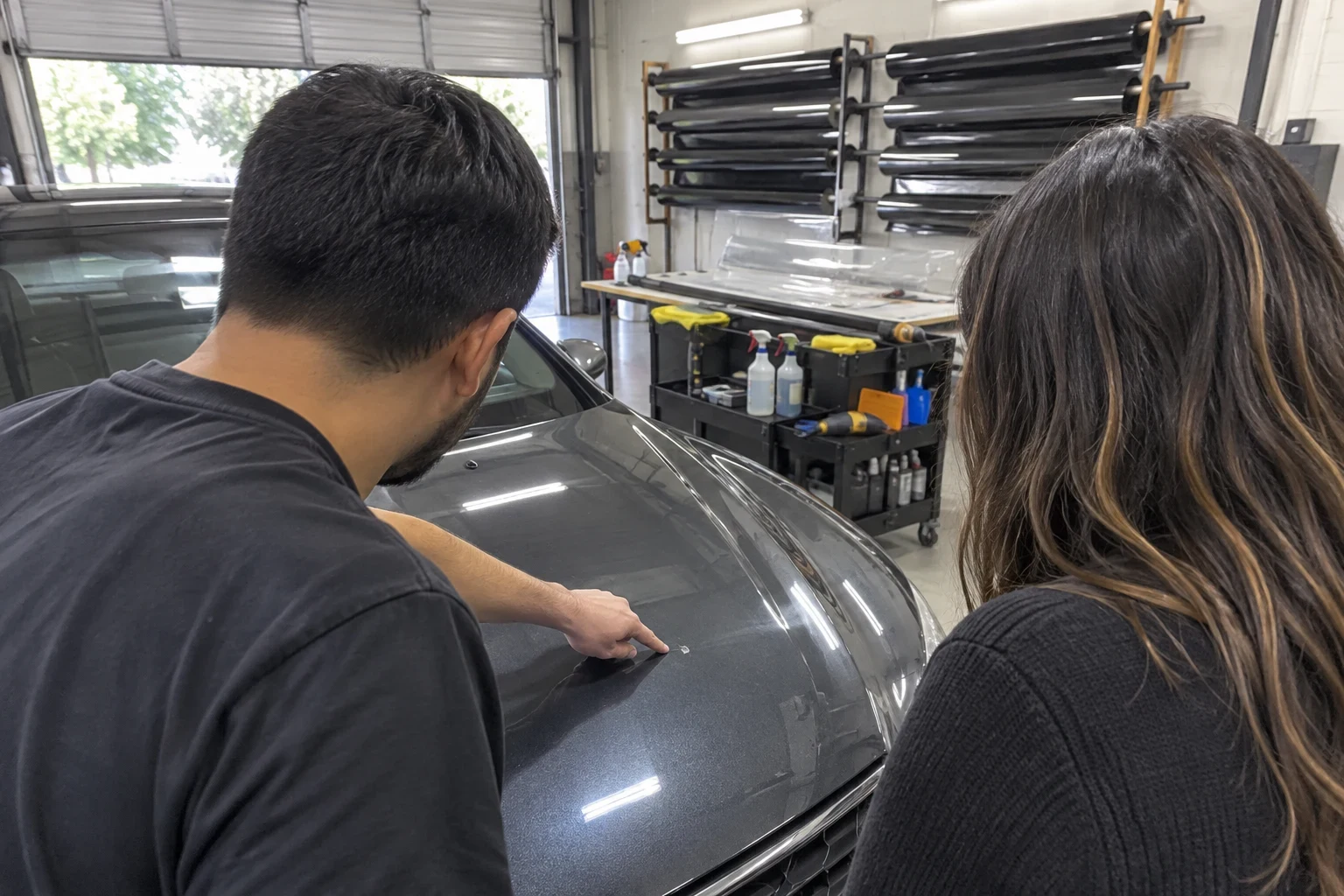
You bring the car in and we walk around the windshield with you. If there is a chip that needs repair first, we explain that before starting.
- 2
Prep the glass
We clean and decontaminate the outside of the windshield and the surrounding trim. Most of the quality of the finished job is decided here.
- 3
Shape and lay the film
The film is cut oversized, heat-formed to your windshield's curve and squeegeed out from the center to push out the slip solution and any air.
- 4
Trim and finish the edges
We trim to a clean, even line, then go over every edge and the sensor area under good light looking for lift, dust or haze.
- 5
Pickup and walkthrough
We show you the finished glass and explain the cure period. A little haze can be normal for the first few days as moisture works out.
What affects the price of windshield film
Every windshield is a little different, so we quote each car on its own. The film is only part of it. Most of the cost is time spent on prep, forming and finishing, and that varies with the glass. Your quote by phone covers what applies to your vehicle.
- Size and curvature
- A large, steeply curved windshield on a truck or SUV takes more film and much more forming than a flatter one on a compact car.
- Film choice
- Films differ in thickness, clarity and how they handle wiper wear. We explain the tradeoffs so you choose with clear eyes.
- Condition of the glass
- Existing chips need repair before film goes on, and heavy contamination adds prep time.
- Camera and sensor housings
- Brackets for driver-assist cameras and rain sensors add detail work to keep that area perfectly clear.
- Removing old film
- If worn film is already on the glass, taking it off cleanly and removing the adhesive is part of the job.
Windshield protection film questions
Will the film stop every chip?
No film makes glass unbreakable, and we will not tell you otherwise. It absorbs and spreads the impact from typical road debris, which prevents many chips and keeps others from reaching the glass. A large rock at highway speed can still do damage.
Does it affect my driver-assist camera or rain sensor?
Properly installed clear film is designed to sit in front of these systems without interfering. The key is a clean, flat, bubble-free install in that area, which is why we slow down around the camera bracket.
What happens when the film wears out?
Wipers and grit slowly scuff the surface, which is the film doing its job. When it starts to bother you, we remove it and install a fresh layer. Your original glass underneath stays protected the whole time.
Can you put film over a chip I already have?
We recommend getting the chip repaired first. Film over an active chip can hide a crack that keeps growing, and you would not see it until it reaches your line of sight.
How should I treat my wipers afterward?
Replace worn or gritty blades, and avoid running wipers on a dry, dusty windshield. We go over the cure period and when you can wash the car at pickup.
Should I add other protection at the same time?
Many customers pair it with paint protection film on the hood and bumper, since those take the same rock strikes. Window tint and ceramic coating can be done on the same visit, and we are happy to talk through what fits your car.
Keep your windshield clear for the long run
Tell us about your car and how you drive, and we will explain what film makes sense and what the install involves. Most questions take just a few minutes on the phone.