ServicesPaint Protection Film
Paint Protection Film in North Auburn
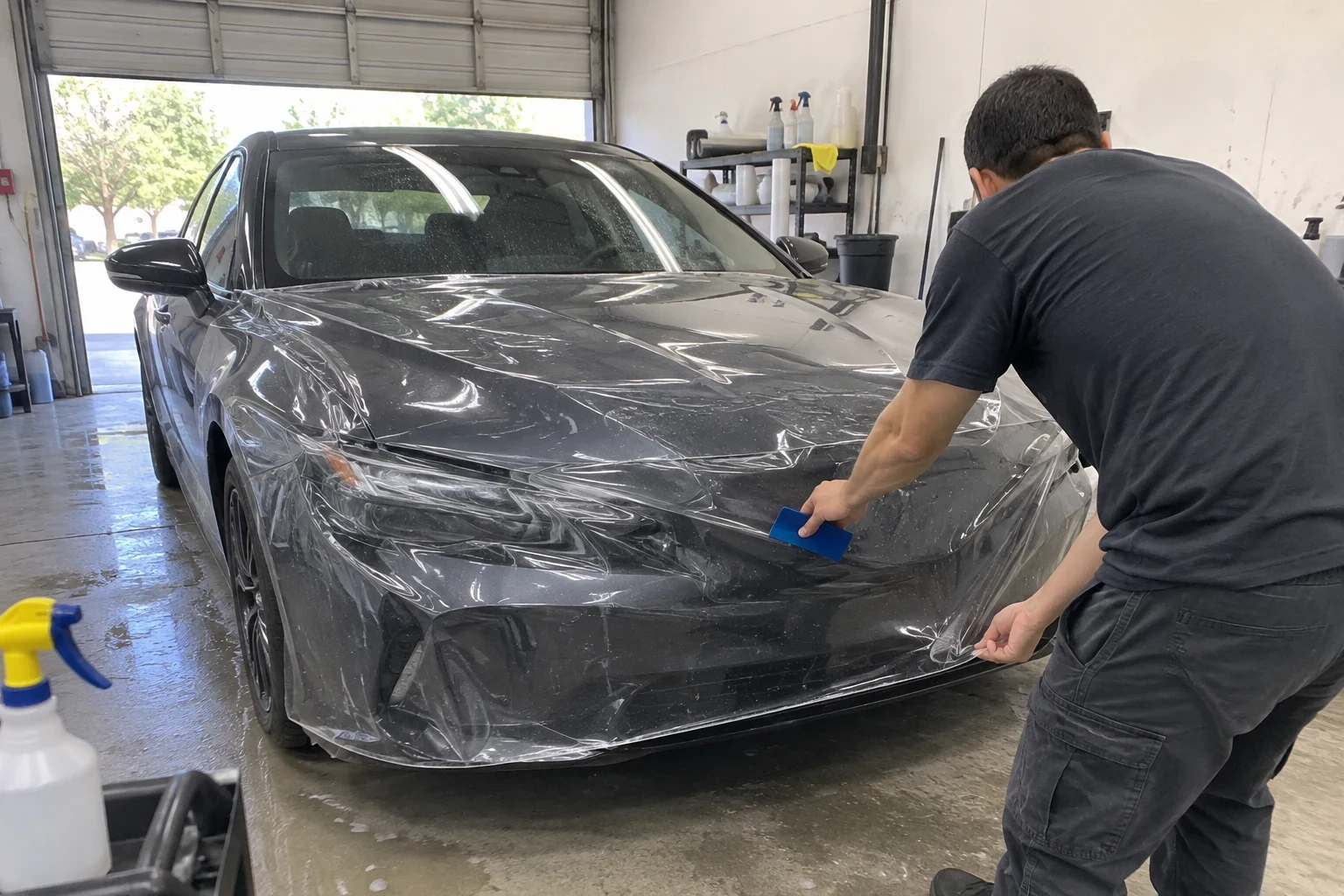
Paint protection film is a clear urethane layer that takes the rock chips, bug acid and parking lot scuffs so your paint doesn't have to. We prep the paint properly, wrap edges by hand and tell you plainly which panels are worth covering for how you drive.
What paint protection film does for your car
Often called a clear bra, paint protection film is a thick, nearly invisible urethane sheet applied to the painted surfaces that take the most abuse. When a pebble hits the hood at highway speed, the film absorbs the impact instead of the clear coat. Most modern films also have a self-healing top layer, so light swirls and fine scratches fade with warmth from the sun or a warm-water rinse.
How long film lasts depends far more on the install than the brand on the box. Lifted corners, dirt trapped under the surface and edges cut short of the panel are what make film yellow, peel or collect grime. We spend our time on those small details, because that is where an install either holds for years or starts letting go after one summer.
With foothill roads, gravel shoulders and freeway grit on the commute, the front of a car picks up chips quickly. Film is the right call when you want the factory paint to stay original, whether the car is new or you just had paint correction done.
What's included in a film install
- Paint decontamination
- Every panel gets washed, clayed and wiped down before any film touches it. A single grain of dust or a dot of tar shows up as a bump under the film, so we take our time here.
- Coverage that fits how you drive
- Packages run from a small strip across the front of the hood and fender tops, up through full front, track-focused and full body coverage. We explain what each one protects and only suggest what your driving really needs.
- Wrapped and tucked edges
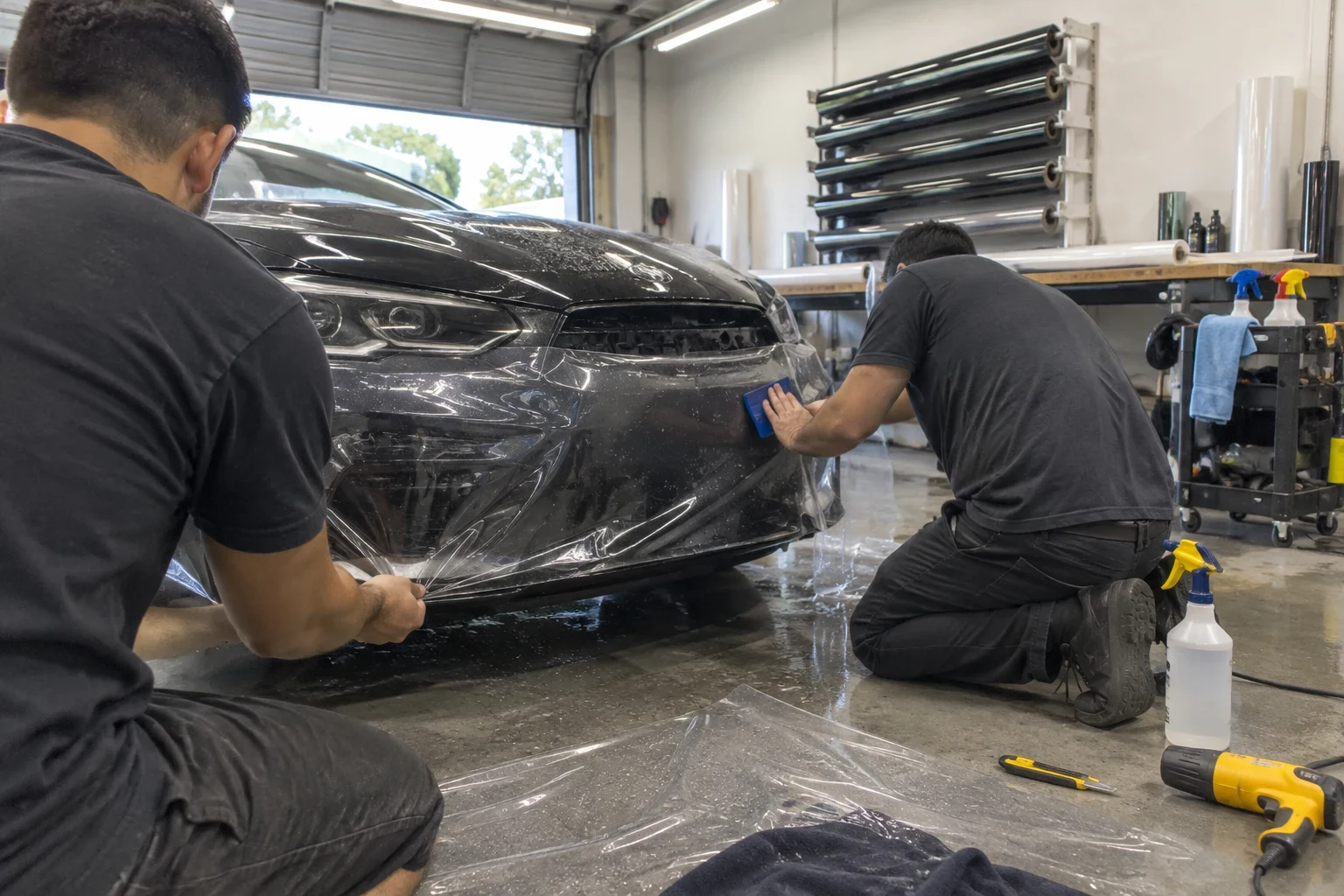
- Where the panel gives us room, we fold the film around the edge so there's no visible line and nothing for grime to catch on. Around emblems and sensors, we make clean relief cuts so the film sits flat instead of bridging gaps.
- Seams placed where you won't see them
- Big pieces like bumpers sometimes need more than one sheet. We line up seams with body lines and shadowed areas so they fade from view at normal distance.
- Final inspection and care notes
- Before you pick up the car, we check every edge under good light. We also go over how to wash it that first week and what to skip while the film finishes curing.
Signs paint protection film makes sense for you
You just bought a new car
Factory paint is at its best on day one. Film applied before the first chip means you never have to touch up the hood.
Your hood already has small chips
If you are seeing pinpoint chips on the front bumper or hood after a few months, the problem will only grow. We can protect what's left, and you can decide whether to touch up first.
You drive a lot of highway or gravel miles
Commuters, mountain trips and rural roads all mean more debris hitting the front end. Film earns its cost fastest on cars that see those miles.
Your paint has been corrected or resprayed
After paying to restore the finish, film keeps that work from being undone by the next road trip.
You plan to keep or resell the car
Original, chip-free paint helps a car hold its value and keeps you from repainting later.
How install day works at our shop
- 1
Talk through coverage by phone
You call, tell us the car and how you use it, and we give you a quote for the coverage that makes sense. We set a drop-off time that suits you.
- 2
Prep and decontaminate
Once the car is in the shop, we wash it, clay the paint and remove any wax or sealant so the adhesive bonds directly to clean clear coat.
- 3
Fit, position and squeegee
Each panel gets its film laid out with slip solution, positioned, then squeegeed from the center outward to push out every bit of moisture. Edges are wrapped or trimmed by hand and heated so they set firmly.
- 4
Cure check and pickup
We let the adhesive start to set, then inspect every edge and seam before handing over the keys. Small moisture bubbles can show for a few days and dry out on their own; anything beyond that, we want to hear about.
What affects the price of paint protection film
Film pricing changes from car to car because the shape of the vehicle and the amount of coverage vary so much. Give us a call, tell us the make, model and the panels you care about, and we'll put together a quote over the phone. We break the number into its parts, so you know exactly what you're paying for before the car comes in.
- How much of the car you cover
- Protecting only the front edge of the hood and the tops of the fenders takes far less film and labor than wrapping every panel. Full front coverage sits in between and is what most drivers choose.
- Body shape and complexity
- Sharp bumper designs, grille openings, parking sensors and deep curves all slow the fit. Flat, simple panels go on faster than sculpted ones.
- Condition of the paint
- Whatever sits under the film stays there, so deep swirls or existing chips may need correction or touch-up before we install. We'll give you a straight answer on whether your paint needs it.
- Film type and finish
- Gloss film and matte film carry different costs. Stealth film, made to keep matte paint looking flat, adds to the price.
What drivers ask us about clear bra film
Something not covered here? (530) 200-8212
Is the film noticeable once it's on the car?
When the install is done carefully, it's very hard to spot. Hand-wrapped edges and seams set along body lines do most of the work of hiding it. Standing close in direct sunlight, you might notice a thin edge on a panel or two where wrapping around isn't possible.
Will the film yellow as it ages?
Older clear bra materials did have a reputation for going yellow. Current urethane films carry a top layer designed to stay clear for the long haul. Rinsing off bug splatter and road film soon after a drive also helps it keep its color.
How many days will the car be at the shop?
It comes down to how many panels you're protecting. A front-edge package is a much shorter visit, while full body coverage can keep the car with us for a few days. When you call, we'll give you an honest estimate of the time.
Can ceramic coating go on top of the film?
It can, and plenty of our customers do both. A ceramic coating over the film makes washing quicker and helps water and dirt slide off. We're happy to book the two services for one visit.
What's the right way to wash the car afterward?
Wait roughly a week so the adhesive can fully set before you wash it. From then on, a gentle hand wash works best. If you reach for a pressure washer, hold the nozzle a good distance from the film edges so they stay down.
Ready to keep your paint chip-free
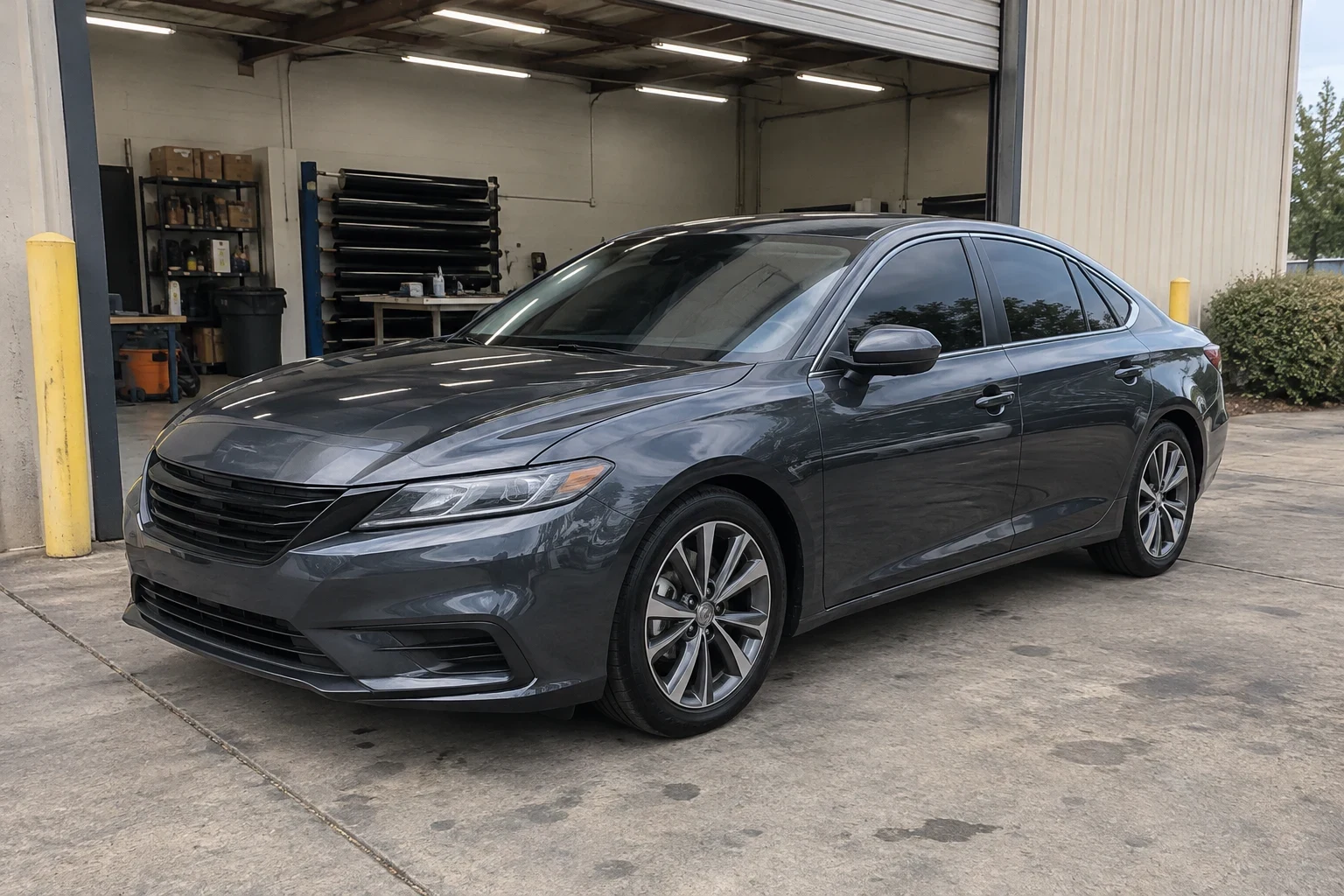
Tell us your car and how you drive, and we'll walk you through the coverage options that fit. If you're also thinking about Windshield Protection Film or Window Tint, we can quote everything in one conversation.